
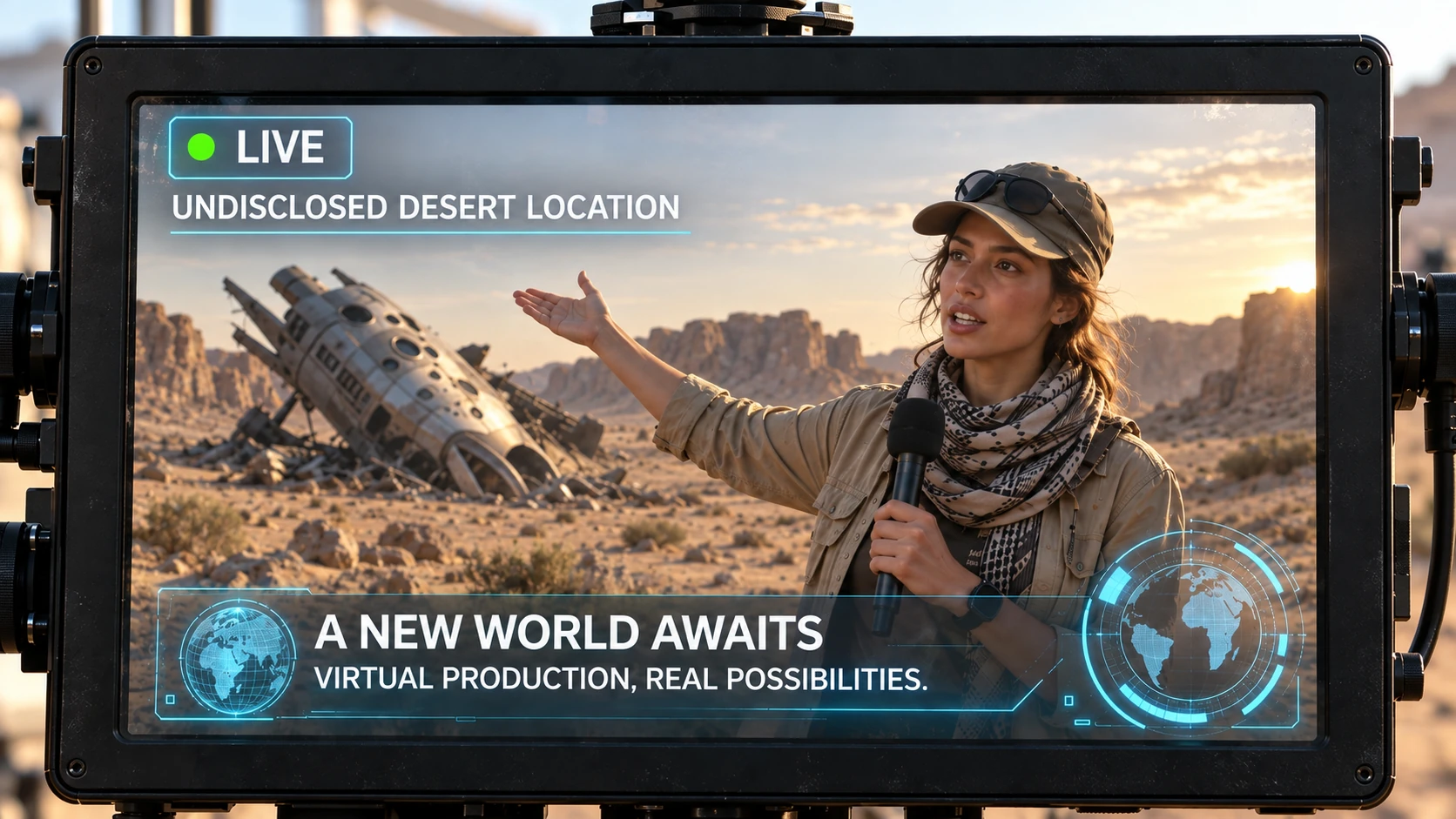
How it works
From camera to finished program.
A camera captures the presenter. The cloud renders the scene around them. Your control room decides what goes to air, and the program comes back to the monitor on location.
The composited return on the field monitor.
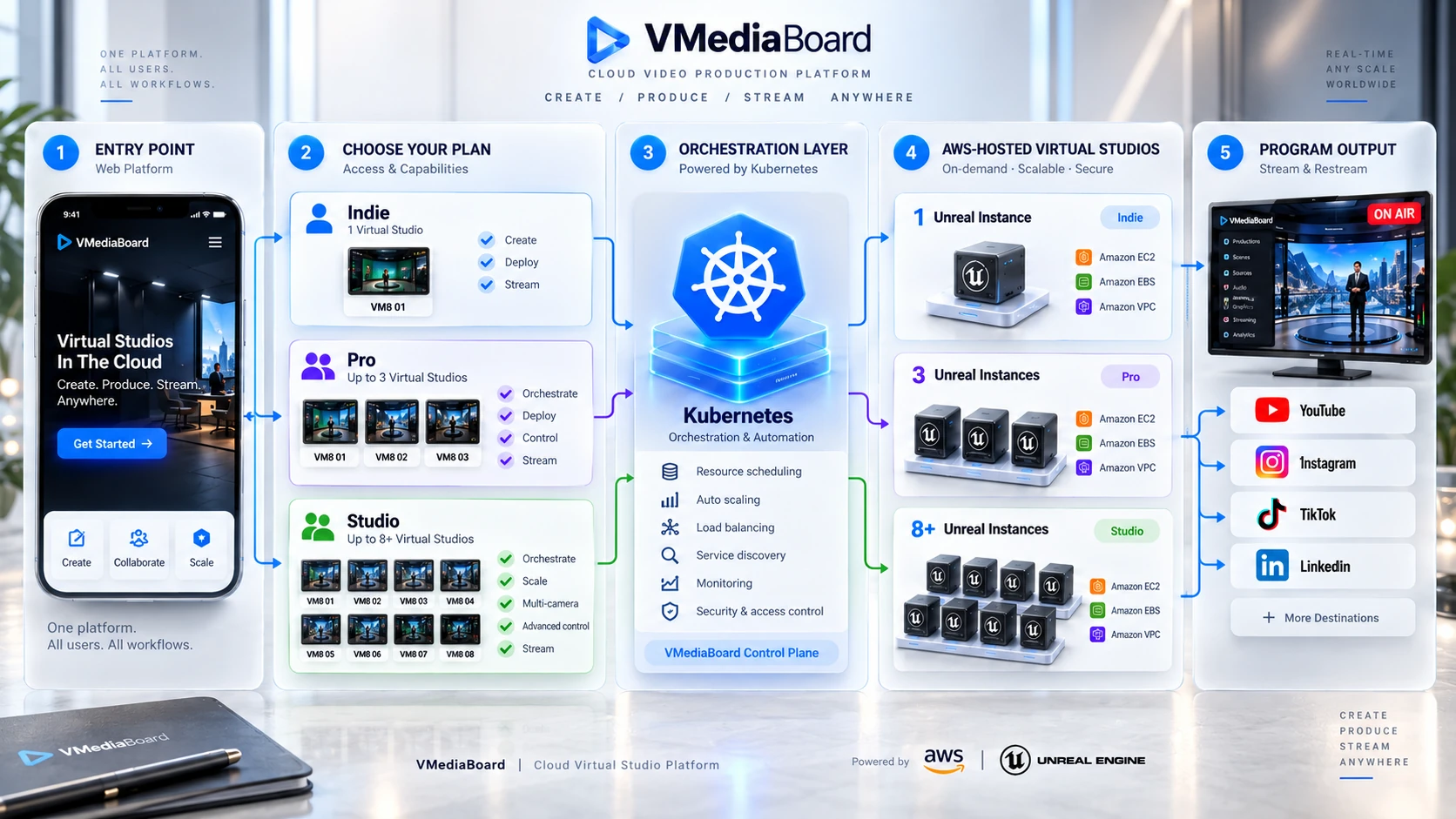
Studios on demand
Virtual studios, orchestrated in the cloud.
You sign in on the web platform and choose the capacity your production needs, from one virtual studio to a fleet. Kubernetes starts the Unreal Engine instances on AWS, schedules the resources, scales them, balances the load and keeps access under control. VMediaBoard is the control plane above it: the same interface directs the studios whether one instance is running or eight.
- Web platform
- Kubernetes
- Unreal Engine on AWS
- Program output
The signal path
Five steps, one connected pipeline.
What happens at each step, and what has to be in place for it to work.
Capture on location
Camera, sound and lighting, as for any production. A green screen if the presenter goes into a virtual set; the real background if you add graphics and objects to it.
You needA camera, microphones, lighting. For augmented reality on a moving camera, tracking suited to the shot.Transmit to the cloud
The feed travels over a contribution link: a TVU transmitter, an SRT encoder or another low-latency route into the MediaHub.
You needA connection sized for the video, with a return path for the program.Render and composite
Unreal Engine instances key the presenter, render the 3D set and add the graphics, on cloud GPUs allocated to the show and released after it.
Handled byVMediaBoard on AWS, with instances orchestrated through Kubernetes.Direct from the control room
Sources, scene routing, audio and the rundown are controlled in VMediaBoard, by the operator and with the copilot's help.
Handled byYour operator, from a browser, wherever they are.Return and distribute
The composited program goes back to the camera monitor and out to the broadcast or streaming destinations chosen for the show.
OutputsSRT, a WebRTC preview, and the streaming platforms selected for the program.
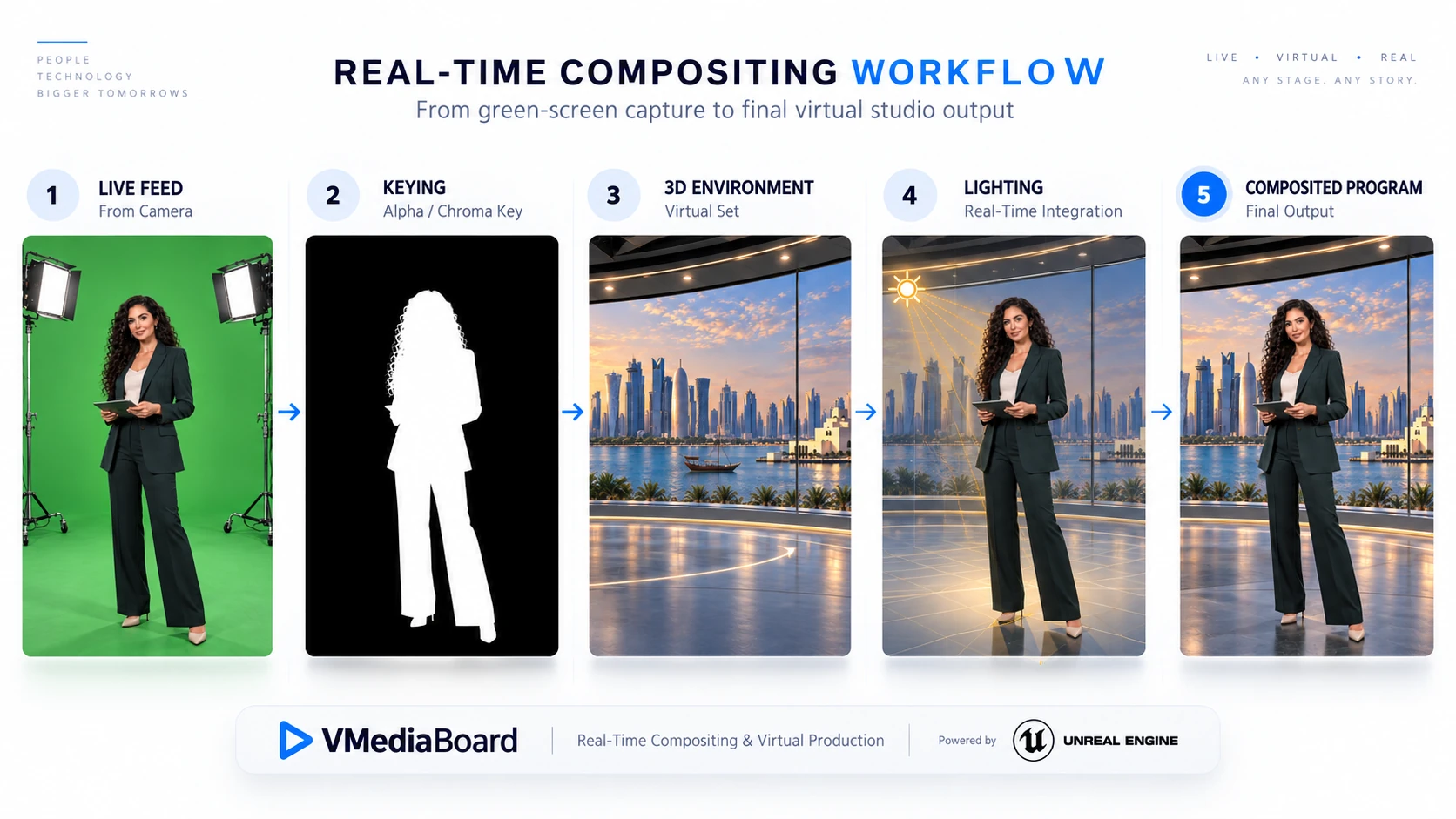
Green screen
What happens to the green-screen feed.
The green background is separated from the presenter. The 3D set, the scene lighting and the graphic layers are combined with the camera image to build the final picture.
- Stage 1Live feedThe camera supplies the video. Lighting and capture quality shape everything after.
- Stage 2KeyingThe presenter is isolated so the green area can be replaced.
- Stage 33D environmentThe set, its objects and the virtual camera views.
- Stage 4LightingThe presenter reacts to the scene's light and shadows.
- Stage 5Composited programThe finished picture, reviewed in Preview and sent to Program.
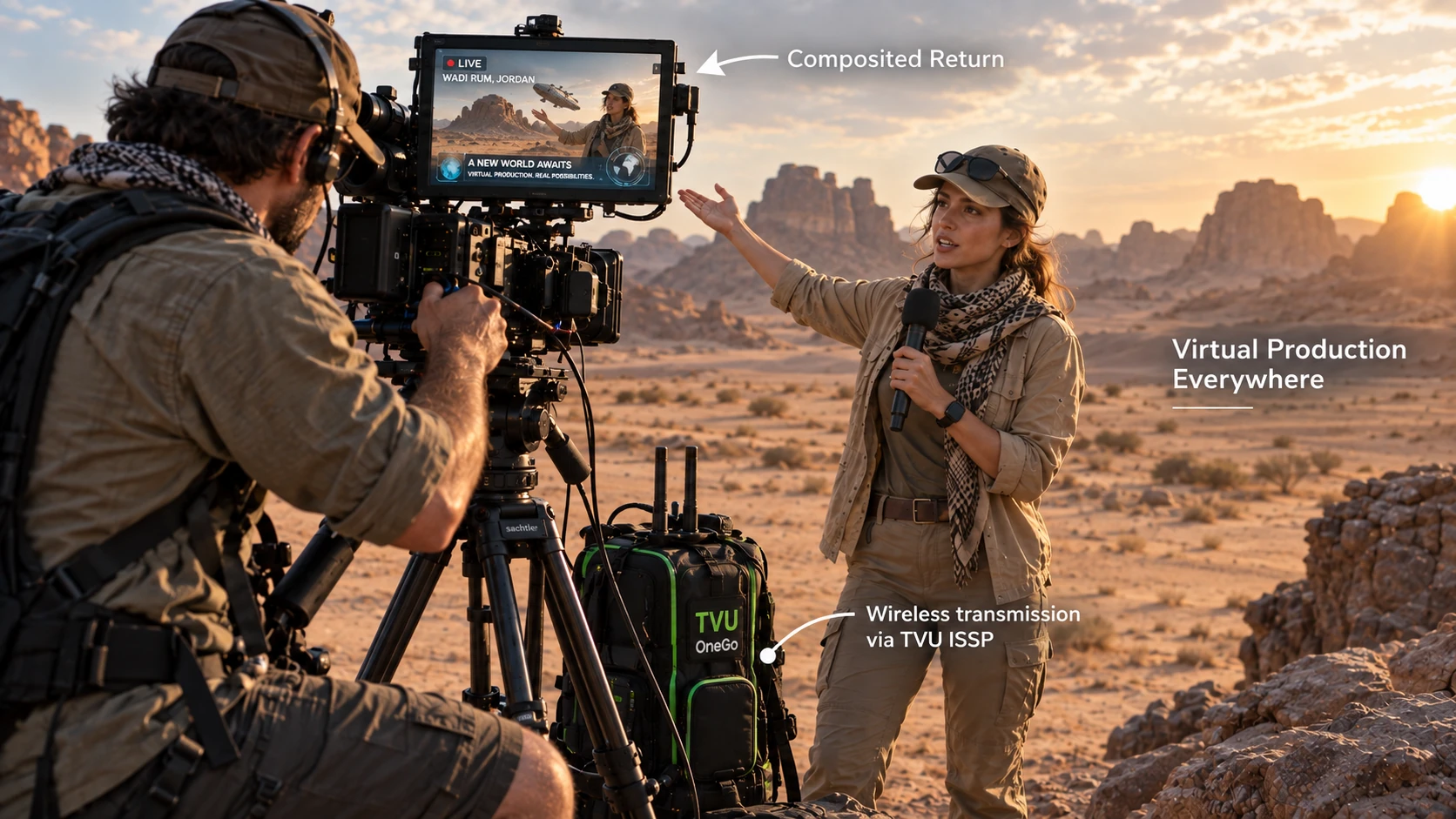
Augmented reality on location
Keep the real place. Add what helps to tell the story.
The camera's surroundings stay visible. A product, a diagram or a virtual character is added to the picture, with tracking suited to the shot, and the crew frames with the composited return on the camera monitor.
The composited return on the camera monitor, with the transmitter beside the tripod.
See the whole path with your own feed.
A demonstration follows a source from capture to the finished program, on a connection like yours.