
Virtual studios
🧬 The philosophical core of virtual production: carrying visual concepts into smart pixel processing
The engineering vision of the VMediaBoard system is not limited to managing the software infrastructure; it extends to adapting the core concepts and fundamental philosophy of advanced virtual production.
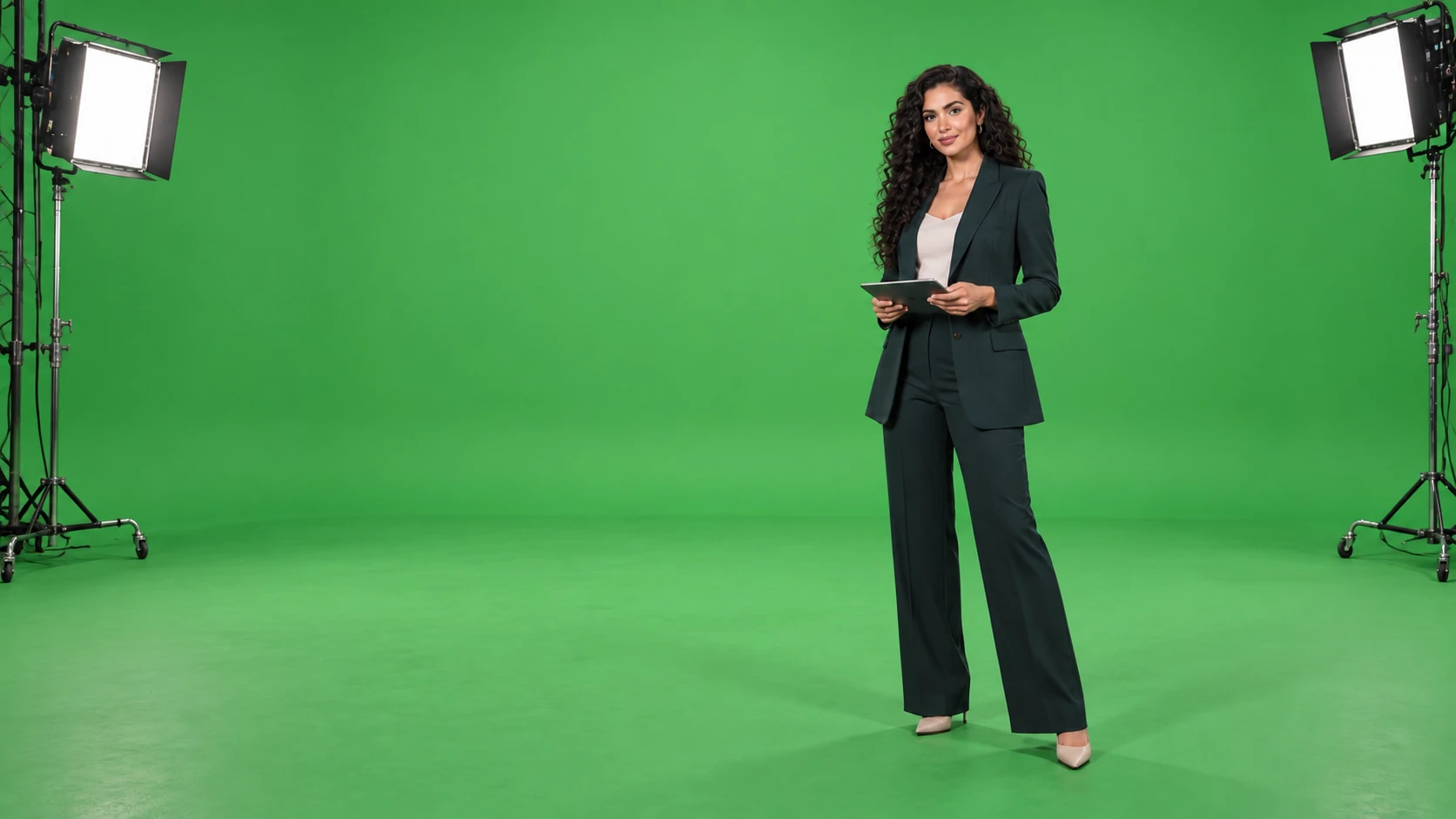
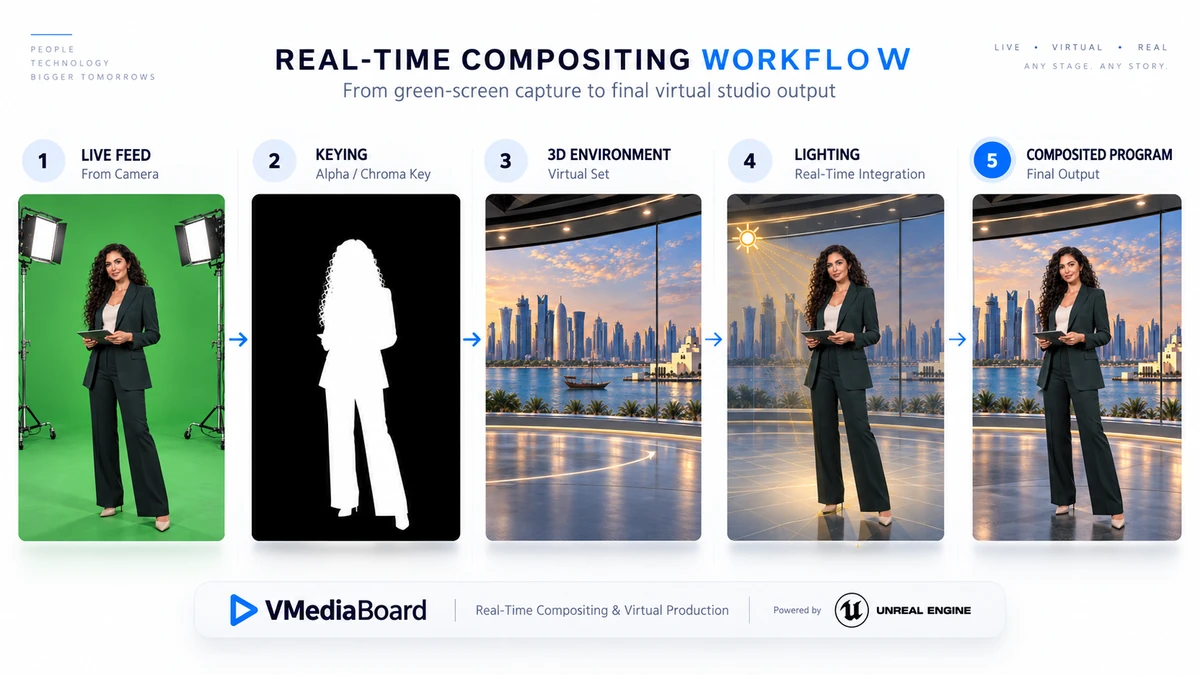
The engineering vision of the VMediaBoard system is not limited to managing the software infrastructure; it extends to adapting the core concepts and fundamental philosophy of advanced virtual production, and moving them from closed local systems to cloud and hybrid processing environments. Where conventional solutions in the broadcast and mixed reality (MR) sector composite the presenter as an isolated flat layer over the digital environment, Pixelstorm reshapes this relationship to integrate the live feed as a fully physical element inside the render engine, along three philosophical axes:
- The presenter integrated inside the digital environment (Talent Inside the Engine): instead of the conventional linear cut-and-key operations that leave visible seams, the VideoSurfaceTSR software lets the live video feed enter with the correct depth dimensions, so that it becomes part of the geometry of the 3D scene inside Unreal Engine. As a result, the real human element interacts in real time with the surrounding digital lighting, is reflected on virtual and glass surfaces, and affects the shadows in full agreement with real-time ray tracing.
- Precise pixel processing and isolation (Pixel-Perfect Keyer): virtual production always faces the challenge of isolating fine details such as flyaway strands of hair, translucent edges and soft shadows on the floor. The system processes this data with single-pixel accuracy through advanced keying algorithms integrated directly into the media pipeline, guaranteeing television stations and content creators a hyper-photorealistic visual integration that matches real physical sets without straining GPU resources.
- Dynamic digital set extension (Set Extension): when the system runs in mixed and extended reality (XR) environments based on giant LED screens, it handles the extension of the virtual set beyond the physical bounds of the tangible screen. As soon as the real camera moves, the digital perspective moves in step with the viewing angles and the tracking in real time, filling the visual gaps and giving content creators production spaces with no geographical limit.
Through this integration, the advantages of cloud rendering and flexible access from any device meet the highest standards of mixed reality. This engineering fusion not only gives distributed teams the ability to collaborate remotely in real time to create immersive experiences; it also guarantees major television stations the highest degrees of security and broadcast stability through on-premise deployment options, so that the final pixel reaching the screen becomes a coherent blend in which it is impossible to separate what is physical from what is virtual.
Share this article
Articles
Read next
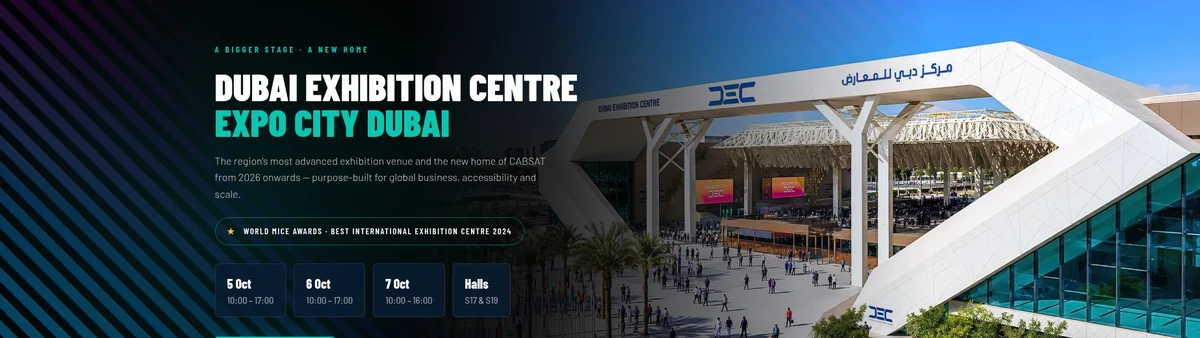
Pixelstorm officially launches the VMediaBoard system at CABSAT 2026 in Dubai
The media, television broadcasting and mixed reality technology sector across the Middle East, Africa and South Asia turns to the Dubai Exhibition Centre, host of the 33rd edition of CABSAT 2026 from 5 to 7 October 2026.
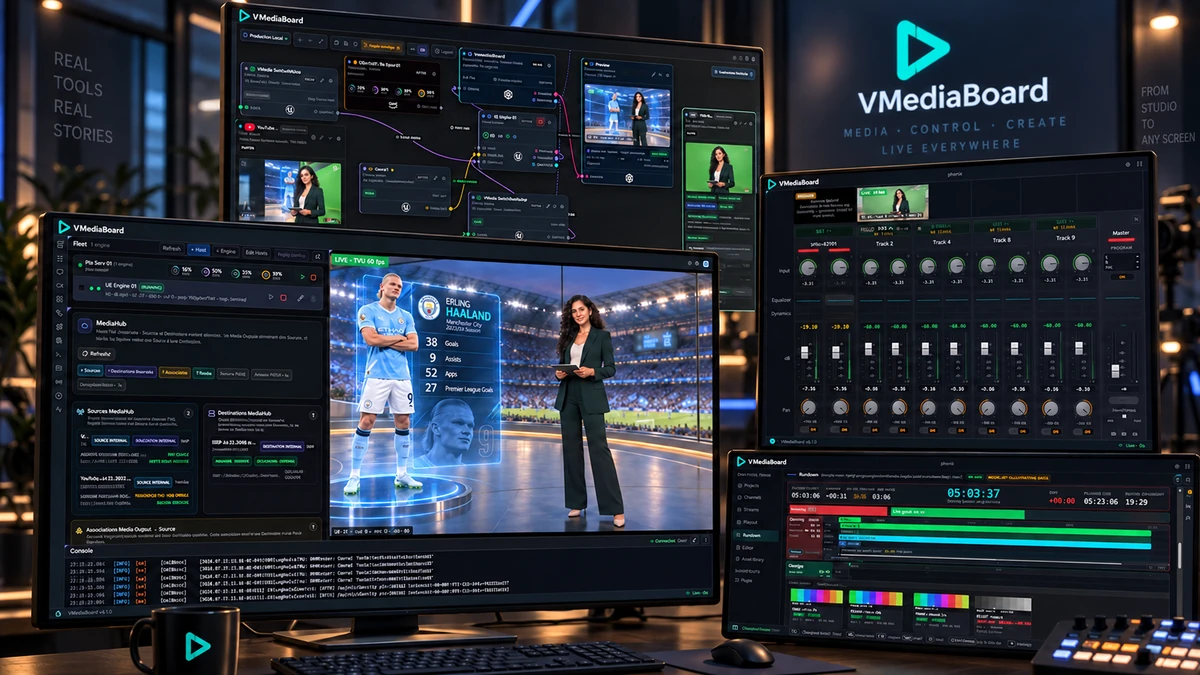
How did Pixelstorm solve the hard production equation? Advanced cinematic quality with cloud flexibility and stable in-house engineering
The world of television and film production has seen a revolution driven by Virtual Production and Extended Reality (XR). At the heart of this shift, engineering solutions are rewriting the rules of broadcasting from behind the curtain.
🔍 The engineering challenge: the problem of overlap and ghost shadows (The Ghosting Effect)
Despite the formidable power of Unreal Engine in simulating shadows, transparency and real-time physical reflections, its default reliance on Temporal Super Resolution (TSR) algorithms puts broadcast system developers in front of a well-known technical dilemma.